This is my first proper “serious” blog post, so I should probably open with something polite and palatable, something that makes people feel comfortable. But that is not how my hearing works, and it is not how my life has ever worked either, so I am starting here instead.
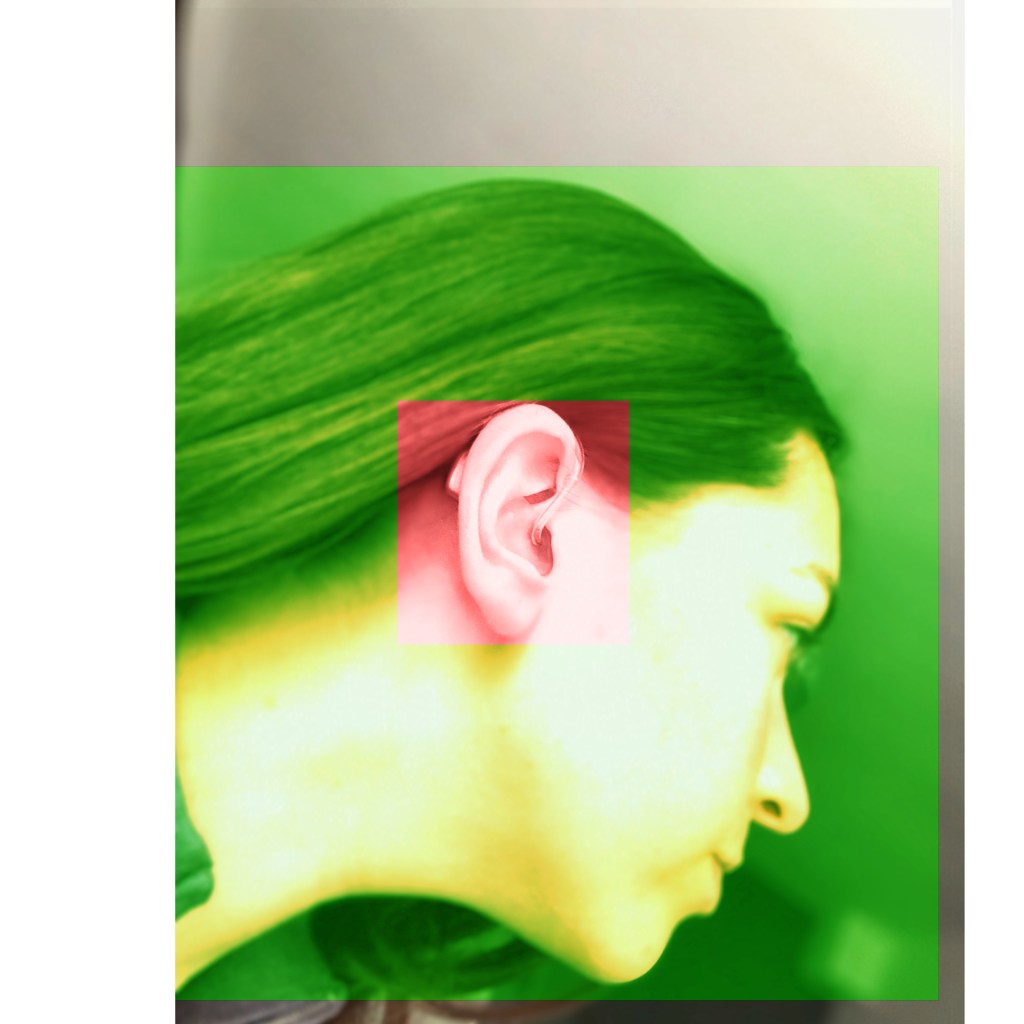
behind the ear hearing aid
I am profoundly deaf in my left ear, essentially no hearing at all, and I have spent years proving to everyone that a hearing aid is not automatically a miracle just because it exists. I repeatedly do not wear the left one because I hate it, and the sensation is hard to explain without sounding dramatic, like an annoying bee buzzing inside my ear every time there is sound, and I do not care how grateful you are supposed to be, that feeling makes you want to tear it out. Eventually I get my own way and the left ear is free, which is also made easier by the fact that a hearing aid in my left ear barely does anything beneficial for my hearing levels anyway.
In my right ear I am moderately to severely deaf, and I have worn a hearing aid in that ear since I am first fitted with one at the age of two. That hearing aid is my life companion in the least romantic way possible.
My hearing is now relatively stable, but it is not fixed and it is not simple, because it fluctuates depending on ear infections, blocked sinuses, faulty hearing aid parts, tinnitus, and a thousand little variables that can turn a normal day into a day where I feel like I am wading through cotton. Ear infections also took some of the high frequency of my hearing, to the point where I now can’t hear a fire alarm at home, which is one of those facts that sounds like a punchline until you realise it is not.
Over the years I have developed coping mechanisms, skills and tactics relating to my deafness, and like most things you learn out of necessity, they are imperfect and occasionally humiliating. Technology has improved over the years and it helps, but it does not erase the awkwardness, and it does not erase the way embarrassment can hit me out of nowhere, especially at school, where social life was basically a constant audio test I did not consent to.
There is one moment from childhood that stays etched in my brain, and it goes something like this:
Friend: “fjeot gmbit fkveoty?” This is what I am hearing.
Me: “What was that?”
Friend: “fjeot gmbit fkveoty?”
Me: “Huh?” Nervous laugh, clammy hands, pulse starting to race.
Friend: “fjeot gmbit fkveoty?”
At this point my mind is in overdrive and adrenaline is already kicking in, and I can tell from her tone that it is a question being asked, which means I have to answer something, so I take a wild gamble and pick from the only options I feel I have available, yes, no, or maybe.
Me: “Ummm… yes?”
Friend: “Yay! Come on then!”
She runs towards the school building and I follow her, trying to look normal while my thoughts whirl, because the worst part is not that I can’t hear, it is that I can’t tell what I have just agreed to. We arrive at a classroom and she says, “Mr Collins! Hannah has something she would like to ask you!”
They both turn to look at me. My friend prompts me, “Ummm, Hannah?” and I want to run away and hide, but I do not. I stand there with clenched fists and a deep breath, and I blurt out the first safe sentence I can think of.
“How long do we have left of lunchtime?”
“Twenty minutes,” he smiles.
My friend is staring at me, puzzling, and I can feel my face burning while I try not to torture myself imagining what she is thinking, because the truth is that even now, 25 years later, I still do not know what she actually asked me in the first place.
The main skill I’ve gained from my hearing loss is the art of lip reading, which sounds impressive until you realise how fragile it is. Lip reading helps me pick out words from mouth movements that I might not catch through hearing, but it is notoriously tiring and at times excruciatingly difficult, because people have facial hair, accents, they mumble, they speak too fast, they look away mid sentence, they cover their mouth, they talk while eating, they talk over music, they talk over traffic, they talk over other people, and sometimes I think I am holding a conversation when really I am playing a high stakes game of pattern recognition.
If there is background noise, which is so often the case, I quickly realise I have no hope and I revert to one of my famous tactics, the guessing game, which never usually goes well.
People ask why I do not just say I can’t hear them, and it is a good question, but I do not have a tidy answer. It is multifaceted and depends on context, and it comes with the territory of an invisible disability, because I can spend my life trying not to make other people uncomfortable, even when I am the one struggling. In awkward situations I often can’t think straight, so I stupidly go along with whatever guessing game I have got myself into, then I try to change the subject quickly, or pretend I am distracted by something else, and if truth be told, there are moments where people must think I am either rude, or odd, or a bit mad.
I think some of my behaviour in conversation is fight or flight, because part of me wants to run away immediately, and another part of me knows that is not socially acceptable, so I stay and I fight through it, adrenaline climbing, heart rate rising, hands sweaty, as if the situation is dangerous when it is literally just someone asking a question in a noisy room.
I am still working on my deaf identity. If I had the choice right here and now, I choose not to have hearing loss, and that probably explains why I sometimes try to portray myself as someone who has more hearing than I actually do, because it feels easier than trying to explain to a fully hearing person what my level of deafness is when it depends on hundreds of variables. Being told to “embrace your deafness” or being sent inspirational quotes only makes me want to retreat into a dark hole, because my hearing loss is hard, every day it is hard, and I’d change it in an instant if I could, so sometimes I kid myself I am not deaf in a bid not to further isolate myself.
Let’s just say it is a work in progress.
There are perks, though, and I’ll admit them without pretending they cancel anything out. When I take out my hearing aid at night, the world goes completely silent, which is ideal when I am sharing a room with someone who snores, or when I am in a hostel and people are packing up at sunrise, or when cleaners are hoovering around me and I am still sleeping off the few glasses of wine consumed the night before. I used to rely on my mother to wake me up, but then I received a vibrating alarm clock, and when it is time to travel I have a battery powered portable one that clips under the pillow, which works, even if it is not exactly the comfiest thing to sleep on.
Being the only deaf pupil at secondary school was interesting, and I’ll dedicate a fair amount of time to writing about that. One of my most memorable deaf events happened when I was in year ten, and by that point I learnt enough tactics to start pushing boundaries and seeing what I could get away with, partly because my mother had the word discrimination repeatedly drummed into my skull from a young age, and she raised me to have thick skin and not take any crap.
I have a lot to say on living with hearing loss, and now that my thirties are fast approaching I feel compelled to put pen to paper, or digits to keyboard, because it is all still there in me, the awkwardness, the tactics, the small wins, the humiliations, the anger, the comedy, the constant calculation.