Why was travelling in English more exhausting than travelling in a foreign language?
Spain should have been harder. I didn’t speak fluent Spanish, relied heavily on Google Translate, and regularly held my phone across café tables so strangers could type replies directly into it. Conversations were slower, slightly awkward, sometimes stitched together with gestures and patience. And yet it felt easier.
Because in Spain, nobody expected fluency. People faced you. They repeated themselves. They slowed down without irritation. The language barrier levelled things. If I hesitated, it made sense.
Ireland, on the other hand, was English. Fast English. Layered accents. Pubs where conversation moves quickly and nobody assumes you might be operating with less information.
26 July 2019. Galway.
“Currently residing in a hostel in Galway, Ireland. I had to go buy a notebook because I’m feeling extremely compelled to write. I don’t know why that is as of yet.”
That’s what I wrote.
I remember running out and buying that notebook almost urgently, like if I didn’t start writing immediately something inside me would go stale. I wrote that maybe it would get published one day. Or maybe it would be the start of some sort of journey in writing. Who knows. I also wrote that I wanted to physically write rather than type because it felt “much more intimate this way. ”
What I didn’t write as plainly was that I was utterly drained.
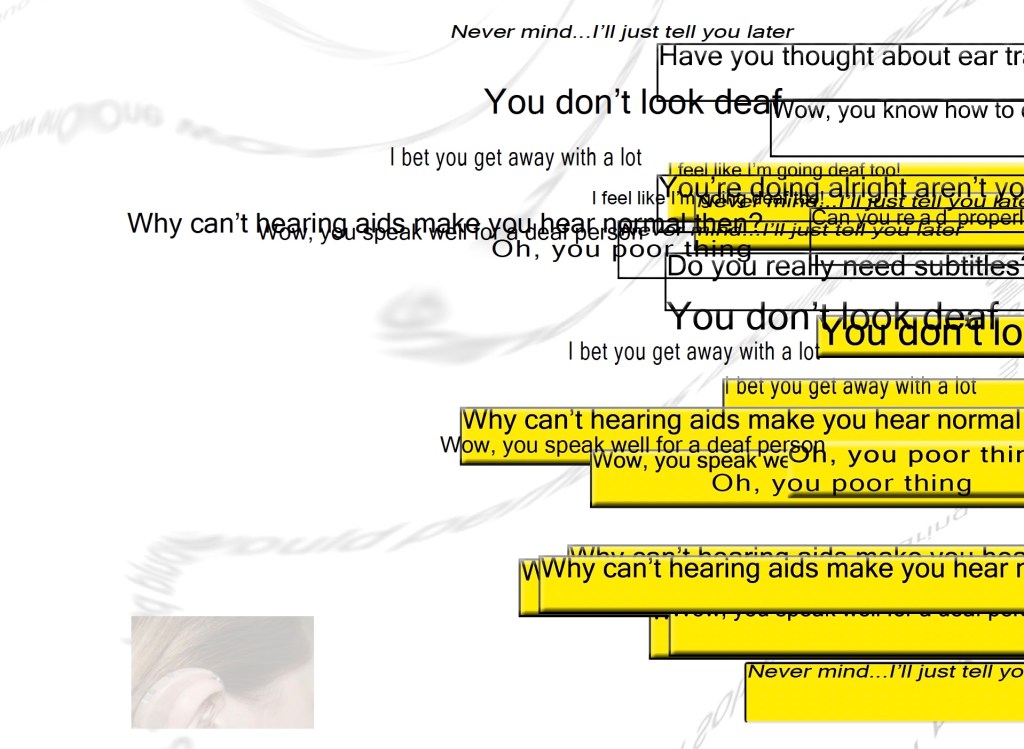
I’d travelled solo before. Spain the year before for six weeks. I don’t remember being this emotionally tired then. Ireland was only a week in and I already felt slightly threadbare.
In Dublin I met an American girl in the hostel. We got on quickly. Travelling does that, it accelerates things. That evening we went to a pub with a live band. It was packed. Loud in the way pubs are when everyone is talking over music and no one seems to struggle except you.
Anyone who knows me understands that in a super noisy environment, talking into my ear isn’t a solution. If you speak into my right ear, I might catch something indecipherable. If you speak into the left, there’s zilch hearing in that ear. Nothing. And yet people instinctively lean into whichever side is closest.
We grabbed the last two seats at a table already occupied by a family. They were friendly, animated, clearly enjoying themselves. My roommate slipped into conversation seamlessly. I did what I’ve done for years. I smiled. I nodded. I tried to follow.
Three out of ten words. That’s usually about what I get in a pub like that.
I heard my name. I heard “band.” I heard laughter. I didn’t hear the full sentence. So I guessed.
And apparently I guessed wrong.
Back at the hostel she laughed and said, “You know they thought you were being rude, right?”
“What?”
“You totally shut them down about the band.”
“I didn’t hear what they said.”
“You could have just told them you’re deaf.”
That phrase. Just told them.
As if it’s a simple add on, like mentioning you’re gluten free or vegetarian.
Later that night, in the hostel bathroom under fluorescent lighting that made everything look slightly harsher and exposed, it escalated.
“Why didn’t you say anything when that guy was talking down to me?” she asked.
“What guy?”
“The guy at the table.”
“Oh, I didn’t hear him.”
She looked at me like I was joking. “Come on.”
“I didn’t!”
“You must have heard something.”
That word. Must.
As if hearing is a choice.
“I catch maybe half,” I said. “More like three out of ten words in there.”
“I bet you’re alright,” she said. “You just tune stuff out.”
“Don’t tell me what I can hear.”
It came out tighter than I meant it to.
She left. I stayed. And I remember thinking how bizarre it is to have to argue the mechanics of your own ears. There’s something exhausting about defending a thing that is simply true. It’s like someone insisting you can see out of your left eye when you can’t.
I found myself standing there staring at myself in the mirror, face flushed, jaw clenched, that specific post-confrontation cringe settling in. Not quite shame. Not quite anger. Just a full-body discomfort and butterflies in my stomach. I gripped the edge of the sink. I had that childish urge to bite the side of my finger just to redirect the feeling somewhere else, like if I applied enough pressure it might leak out of me. I replayed the conversation immediately. Did I sound dramatic? Did I overreact? Should I have explained it better? Should I have just laughed it off?
She didn’t mean harm. She just lives in a world where sound works effortlessly.
In Spain, none of that tension existed. The language barrier made slowness normal. People faced me because they needed to. We were all already aware communication required effort. Google Translate sat between us like a neutral third party.
In Ireland, I was expected to be fluent. And when you look fluent but operate at half capacity, the margin for error is much smaller. Part of me was angry at her certainty. Another part was frustrated with myself. Why didn’t I just say at the table, clearly, “I’m deaf, you’ll have to face me, I lip read, and even that might fail but…”? Why do I default to stitching together fragments and hoping it passes? But there’s another truth underneath that. Passing gives you control. If I don’t disclose, I decide when the gap shows. If I do disclose, I feel that often the dynamic shifts immediately, the natural flow of laughter and conversation is ruined and I become the adjustment.
Hostels amplify everything. Mornings are chaos. Alarms going off, bags rustling, people chatting before they’re fully awake. Yet this isn’t my chaos, as I am oblivious it all. I always thought that my roommates must’ve thought I was the heaviest sleeper in the world. I didn’t ever disclose to anyone that I could not hear a single thing while I slept, due to safety reasons. On my travels, I sleep with a vibrating alarm clock resembling a medium sized pebble shoved under my pillow. When it goes off it feels like the bed’s malfunctioning and I have to scramble quickly to shut off the vibrations before the person in the bottom bunk starts wondering what on earth I’m doing up there.
Ireland wasn’t harder because I’m deaf. It was harder because nobody expected me to need extra time. In Spain, slowing down was built into the interaction. In Ireland, speed was normal, and if you were even slightly behind, you just looked awkward.
I wrote in that notebook that I wanted to take the reader on a journey with me, capturing past and present moments and showing what life is like for a deaf child and young adult, struggling to fit into a hearing world. That line makes me wince slightly now because it sounds grand. But the instinct was right. The instinct was to document the quiet stuff. The almosts. The maybes. The half-heard sentences. The exhaustion that doesn’t look dramatic enough to justify itself.
I wish I could say Ireland changed me fundamentally. That I came home declaring my deafness proudly in every noisy pub.
It didn’t.
I still sometimes pass. I still sometimes nod along, secretly hoping no one would ask me a question. I still sometimes gamble on context. What changed was awareness. I understood more clearly that the tiredness wasn’t weakness. It was effort. Continuous adjustment in rooms that don’t realise you’re adjusting. And perhaps more importantly, I realised something else that I wrote, almost casually, in that notebook.
“You kind of have to be more vulnerable, as much as I hate to admit it.”
That might be the real lesson. You can keep managing. You can keep constructing three out of ten words into full conversations. You can keep passing.
Or you can say it plainly.
“I’m deaf. You’ll need to face me when you speak.”
Sometimes I say it.
Sometimes I don’t.
And that’s where I am with it.